Submission to the Royal Commission on Antisemitism and Social Cohesion. Julie McCrossin AM
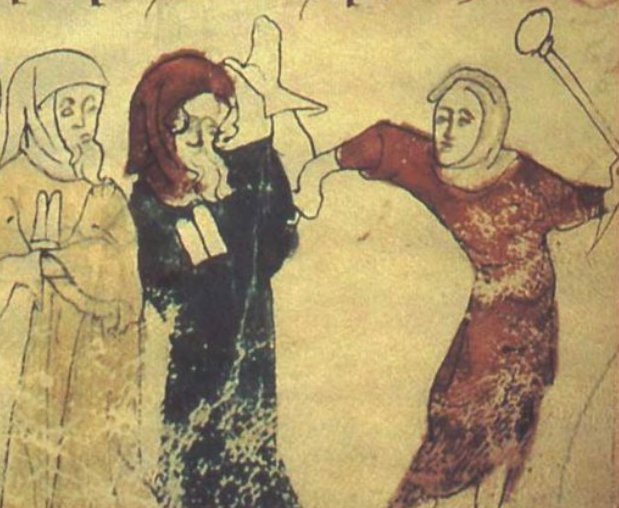
Antisemitism and Christian Churches
As a Christian woman – who attended Church of England girls’ schools for nine of my 12 school years, who has attended church throughout most of my life and attended weekly for over 16 years – I recommend that the Royal Commission consider how the trial and crucifixion of Jesus is presented and explained at Easter church services by ministers and priests.
It is my submission that Christian leaders have a duty to reflect deeply on how to teach the Easter story without inciting hatred of Jews at a time when hatred of Jews is increasing globally, including in Australia.
My primary concern is that people attending churches at Easter in Australia may continue to believe that the statement, “the Jews killed Jesus” is a fair summary of the events depicted in the New Testament. This is despite the fact that policy documents have been published by mainstream Christian traditions that offer a different interpretation and acknowledge that grave and deadly harm has been inflicted on Jewish people for centuries due to the promotion by Christian churches of a theology that “the Jews killed Jesus.”
My submission is that it is not only church attendees who may be influenced negatively towards Jewish people at Easter time. The many thousands of Australian children who attend Christian schools may also be potentially influenced to see Jewish people as “Christ killers” unless the people teaching them about the Christian faith are aware that churches have published policies seeking to overturn this approach to scriptural interpretation.
The three policy documents I will refer to in this submission are:
Jews and Judaism: A Statement by The Uniting Church in Australia 12th Assembly, 2009.
God’s Unfailing Word. Theological and Practical Perspectives on Christian-Jewish Relations. Published in 2019 for the Faith and Order Commission of the Church of England by Church House Publishing.
Nostra Aetate. Declaration on the Relation of the Church to Non-Christian Religions Proclaimed by His Holiness Pope Paul VI on October 28 1965.
It is my submission that Australian church leaders have an important current role to play in combating antisemitism by taking action in 2026/2027 to proactively educate their congregations and parish leaders about the existence and content of these documents and by sharing examples of sermons and liturgies that are models of how the story of Easter can be told without promoting negative stereotypes of Jewish people.
The Uniting Church in Australia
A theologian, educator and retired Uniting Church Minister, John Squires has sought to fulfill this educational duty for several years. It is time the voices of theologians like John Squires within the Christian community were given a higher profile at parish level.
In an article published in 2022 entitled “Sensitivity to ‘the Jews’ as we celebrate Easter (for Holy Week)” John Squires says, “As we draw near to the annual celebration of Easter, we find that we have a story that is driven by antagonism and conflict, with scenes of aggression and violence. We need to think carefully about how we tell the story found in the Gospels, and reflect prayerfully about how we preach the good news from these narratives.
“We know the main characters in the story: Jesus and his followers, and the key authority figures of his day, lined up against him: the Jewish Sanhedrin; Pontius Pilate, the Roman Governor of Judea; and Herod Antipas, tetrarch of Galilee and Perea.
“The way that the story unfolds, invites those who hear it—and those who preach on it—to make one party into “the villain”, even as others in the story receive (implicit) excusing. We side with Jesus, and that makes us view the other characters as “the baddies”.
“So the danger sits before us, at Easter most especially: we might be tempted to target “the Jews”, to make negative or derogatory comments about Judaism and Jewish people, even (although I would hope not) to blame “the Jews” for the death of the Messiah. How close does this come to anti-Judaism, or even antisemitism?”
Squires goes on to describe a different approach to preaching at Easter time and his article includes links to a resources to assist preachers who are seeking to avoid generating feelings of anti-Judaism or antisemitism in the congregation.
Here is Squires’ conclusion and call to action to members of the Uniting Church.
“The trap we must avoid, then, is this: do not read the Gospel narratives as straightforward, unadorned historical narratives. Do not accept “at face value” all that is recorded in those chapters. Apply careful, reasoned criticism as you approach the text. Consider the narrative of the passion, not only in its literary context, but in the context of the religious, social and political streams that were swirling in the later first century.
“And invite those who reflect with you, or listen to your words, or read the stories in the text, to do the same—not to blame “the Jews” for what happened to Jesus; but rather, to consider how the story may well have been shaped, over the decades, in the face of the pressures and stresses of life for the early followers of Jesus, in the Roman Empire, with growing antagonism from (and towards) the Jewish authorities.
“This is certainly quite consistent with the policy adopted by the Uniting Church National Assembly in 2009, which declares that “The Uniting Church acknowledges with repentance a history of interpretation of New Testament texts which has often failed to appreciate the context from which these texts emerged, viz. the growing separation of Christianity and Judaism with attendant bitterness and antagonism, resulting in deeply rooted anti-Jewish misunderstandings” (para. 9).
“The Statement on Jews and Judaism also affirms that “The Uniting Church does not accept Christian teaching that is derogatory towards Jews and Judaism” (para. 16). We need to hold to this in what we preach at Easter.”
Up until the last 12 months, I attended a Uniting Church parish in Sydney, including a period of time on the church council, for over 15 years. After moving to Adelaide I continued to attend this Uniting Church service each Sunday via Zoom. I read, and continue to read, Uniting Church on-line newsletters and publications. It is my impression that the Statement on Jews and Judaism is not widely known about within the church at parish level.
Now is the time to raise the profile of this document.
The Church of England/Anglican Church
In 2025 I joined an Anglican parish in suburban Adelaide which I now attend regularly.
In 2019 the Church of England issued a document entitled, God’s Unfailing Word. The media release announcing the publication was headed, “Church of England teaching document calls for repentance over role of Christians in centuries of antisemitism.”
The media release continued, “Christian theology played a part in the stereotyping and persecution of Jewish people which ultimately led to the Holocaust, a new reflection on Christian-Jewish relations issued by the Church of England acknowledges.
“The teaching document, entitled God’s Unfailing Word, is the first authoritative statement on the subject from the Church of England. It speaks of attitudes towards Judaism over many centuries as providing a “fertile seed-bed for murderous antisemitism”.
“It urges Anglicans and other Christians not only to repent of the “sins of the past” towards their Jewish neighbours but to be alert to and actively challenge such attitudes or stereotypes.
“The document, published by the Church of England’s Faith and Order Commission, encourages Christians to rediscover the relationship of “unique significance” between the two faiths, worshipping one God, with scriptures shared in common.
“The Christian-Jewish relationship should be viewed as a “gift of God to the Church” to be received with care, respect and gratitude, it makes clear.
“Christians should, therefore, be mindful of the difficult history of the two faiths and apply sensitivity in the use of some passages of scripture and liturgy, hymns and art as well as in sharing their faith with Jewish people and in discussions about Israel.”
It is unclear to me the extent to which such “sensitivity in the use of some passages and liturgy, hymns and art” is occurring in Anglican Churches and schools across Australia when they discuss the role of the Jewish leaders and public crowd in Jerusalem in the trial and sentencing to death of Jesus.
This issue is pertinent to the work of the Commission because in Australia many thousands of families currently send their children to Christian schools for all sorts of reasons. Thus the way the Easter story is presented in schools is influencing the attitude of young people nationally towards Jewish people even if the families are not attending churches.
In 2025, 831,692 Australian children attended Catholic schools and 715,822 Australian children attended Independent schools, including secular, Islamic, Christian & other faith schools. (Source: Australian Bureau of Statistics)
Church services on Good Friday, when Christians remember the crucifixion of Jesus, have been a catalyst for pogroms against Jewish people for centuries across Europe, especially in Russia and Poland, and beyond.
Pogrom is a Russian word meaning “to wreak havoc, to demolish violently.” Historically, the term refers to violent attacks by local non-Jewish populations on Jews in the Russian Empire and in other countries. (Source: The Holocaust Encyclopedia. United States Holocaust Memorial Museum).
The gospel reading for Good Friday in 2026, as specified in The Revised Common Lectionary, was the Passion according to John Chapters 18.1 – 19.42. The Lectionary lists bible readings for use in Christian worship and is widely used by churches around the world.
“The version of the Easter story told by John in the New Testament – the arrest of Jesus, the interrogations, the trial by the Roman Governor Pontius Pilot, Pilot’s communication with Jewish leaders and the crowd and Pilot’s decision to execute Jesus – depicts a Jewish leadership and Jerusalem crowd seeking the death of Jesus. Indeed, it depicts a crowd rejecting an alternative person offered by Pilot to be crucified and has the crowd calling for Christ to be the one to be executed. John depicts Pontius Pilot as reluctant to execute Jesus.
After hearing these passages from John read to the congregation, as happened in my church this year, it is all too easy to conclude “the Jews killed Jesus”. Indeed, it is easy to draw the same conclusion from the other gospels as well – unless the minister or priest leading the service actively seeks to offer an alternative way of understanding the biblical text.
Historically, Good Friday has perpetuated a view that the Jews committed “deicide”. And historically collective guilt has been applied to all Jewish people for the death of Jesus.
The American Jewish Committee explains it this way: “Deicide is the charge that Jews bear eternal responsibility for the death of Jesus Christ. This claim is based on a misguided interpretation of Matthew 27:24-25, “His blood be on us, and on our children,” also known as the blood curse. This verse (25) has led to more Jewish suffering than any other passage in the Christian Bible. This source of antisemitism among Christians was only refuted by the Catholic Church in 1965, with Nostra Aetate the landmark document that rejected collective Jewish responsibility for this crime. Protestant churches have also repudiated the deicide charge. Nevertheless, some churches today continue to teach that Jews killed Jesus. “
As I stated at the beginning of this submission, The Church of England, Catholic Church and Uniting Church of Australia have all published documents addressing the role of the church in promoting negative attitudes toward Jewish people and the Jewish faith and calling for change.
It is my submission that too few Christian leaders who preach at Easter appear to have read these documents, or if they have, they are failing to communicate new ways of thinking theologically to their congregations. This submission is based on my own experience as a parishioner and on conversations with ministers.
The Catholic Church
The Catholic Church published a major statement on Jewish Catholic relations in 1965. This ground-breaking document is clear and refreshingly brief. Thus it is more likely to have been read widely within the Catholic church. It is called Nostra Aetate.
The Britannica on-line summary of Nostra Aetate describes its significance in this way: “Nostra Aetate rejected the traditional accusation that the Jews killed Christ, recognized the legitimacy of Judaism and Islam and condemned antisemitism.”
Nostra Aetate was issued from the Vatican by Pope Paul VI on October 28 1965. It is also known as Declaration on the Relation of the Church to Non-Christian Religions.
Here is the most pertinent section of Nostra Aetate relating to antisemitism and the historic accusation that the Jews killed Jesus.
“Since the spiritual patrimony common to Christians and Jews is thus so great, this sacred synod wants to foster and recommend that mutual understanding and respect which is the fruit, above all, of biblical and theological studies as well as of fraternal dialogues.
“True, the Jewish authorities and those who followed their lead pressed for the death of Christ;(13) still, what happened in His passion cannot be charged against all the Jews, without distinction, then alive, nor against the Jews of today. Although the Church is the new people of God, the Jews should not be presented as rejected or accursed by God, as if this followed from the Holy Scriptures. All should see to it, then, that in catechetical work or in the preaching of the word of God they do not teach anything that does not conform to the truth of the Gospel and the spirit of Christ.
“Furthermore, in her rejection of every persecution against any man, the Church, mindful of the patrimony she shares with the Jews and moved not by political reasons but by the Gospel’s spiritual love, decries hatred, persecutions, displays of anti-Semitism, directed against Jews at any time and by anyone.”
The 60th Anniversary of Nostra Aetate received significant attention in 2025 within the Catholic Church and in the mainstream media.
The Australian Catholic Bishops Conference published a summary of the key sections of Nostra Aetate. Here is their description of point four about the Jewish community.
“4.An account of the spiritual ties between Christians and Jews, which reproves indiscriminate accusations of Jewish responsibility for the death of Jesus, affirms the ongoing validity of the Covenant between God and the people of Israel, and repudiates hatred, persecution and antisemitism as contrary to God’s universal love.”
The Way Forward
I would like to conclude my submission by applauding a forum held in Sydney in 2025 which is a positive example of the sort of educational initiative all Christian churches need to undertake in a systematic and on-going manner to address antisemitism.
It is a marvellous example of the Catholic and Jewish communities collaborating to prevent and address antisemitism among school students.
This is a section from an article in the Australian Jewish News published in October 2025 that outlines the key features of the forum.
“Forum marks 60th anniversary of Nostra Aetate.
“High school students from Jewish and Catholic schools in Sydney came together at a forum to mark the 60th anniversary of Nostra Aetate, which reset Catholic-Jewish relations.
“Held at Australian Catholic University’s (ACU) North Sydney Campus under the auspices of Catholic Education NSW and the Executive Council of Australian Jewry, 125 students from 15 Catholic and Jewish secondary schools heard from two leading figures in Catholic-Jewish relations.
“Students asked questions about issues related to antisemitism to a panel of Jewish and Catholic leaders including Executive Council of Australian Jewry co-CEO Peter Wertheim, chief minister of the Great Synagogue Rabbi Benjamin Elton, prominent Catholic educator Dr Paul O’Shea, and Catholic Religious Australia Justice Research Officer Emma Carolan.
“The students discussed questions including if it was possible to be pro-Jewish but anti-Israel, how to define anti-Zionism and antisemitism, the impact of social media on the rise of antisemitism, what elements of interfaith discourse have been avoided since 7 October, 2023, and the Catholic Church’s position on Israel.
“The dialogue will inform the production of digital resources to help combat antisemitism in Catholic schools throughout NSW. The resources will be produced by ACU’s Ancient Israel Program, the only Australian university course dedicated to the archaeology and history of Ancient Israel.” Australian Jewish News October 29 2025. https://www.australianjewishnews.com/forum-marks-60th-anniversary-of-nostra-aetate/
Reference Documents
Jews and Judaism: A Statement by The Uniting Church in Australia 12 Assembly, 2009. https://lnkd.in/gzjw3pcJ
“Sensitivity to ‘the Jews’ as we celebrate Easter (for Holy Week)” John T. Squires April 8 2022 https://johntsquires.com/2022/04/08/sensitivity-to-the-jews-as-we-celebrate-easter/
Church of England teaching document calls for repentance over role of Christians in centuries of antisemitism: https://lnkd.in/gJdwi6p2
“Gods Unfailing Word. Theological and Practical Perspectives on Christian-Jewish Relations. Published 2019 for the Faith and Order Commission of the Church of England by Church House Publishing”
https://www.churchofengland.org/sites/default/files/2019-11/godsunfailingwordweb.pdf
‘Segregation’ of Australian school system grows as exodus to private schools continues. https://www.abc.net.au/news/2026-03-05/abs-school-enrolment-data-private-vs-public-cost-of-living/106414016
Nostra Aetate. Roman Catholic Declaration on the Relation of the Church to Non-Christian Religions. Summary in Encyclopedia Britannica.
https://www.britannica.com/topic/Nostra-aetate
Nostra Aetate. Declaration on the Relation of the Church to Non-Christian Religions Proclaimed by His Holiness Pope Paul VI on October 28 1965. https://www.vatican.va/archive/hist_councils/ii_vatican_council/documents/vat-ii_decl_19651028_nostra-aetate_en.html
60th Anniversary of Nostra Aetate: Declaration on the Relation of the Church to Non-Christian Religions. Australian Catholic Bishops Conference 2025. https://www.catholic.au/s/article/60th-Anniversary-of-Nostra-Aetate
American Jewish Committee. Translate Hate. Deicide. https://www.ajc.org/translatehate/deicide
John Chapters 18 and 19 New International Version. https://www.biblegateway.com/passage/?search=John%2018-19&version=NIV