For people who have survived disfiguring treatment for head and neck cancers, help is needed
Editor: Melissa Sweet | Author: Charles Maskell-Knight | Friday, August 14, 2026
Introduction by Croakey: People who have survived head and neck cancers and associated treatments are then experiencing additional suffering and hardship as a result of difficulties accessing and affording prostheses, an event at Parliament House was told this week.
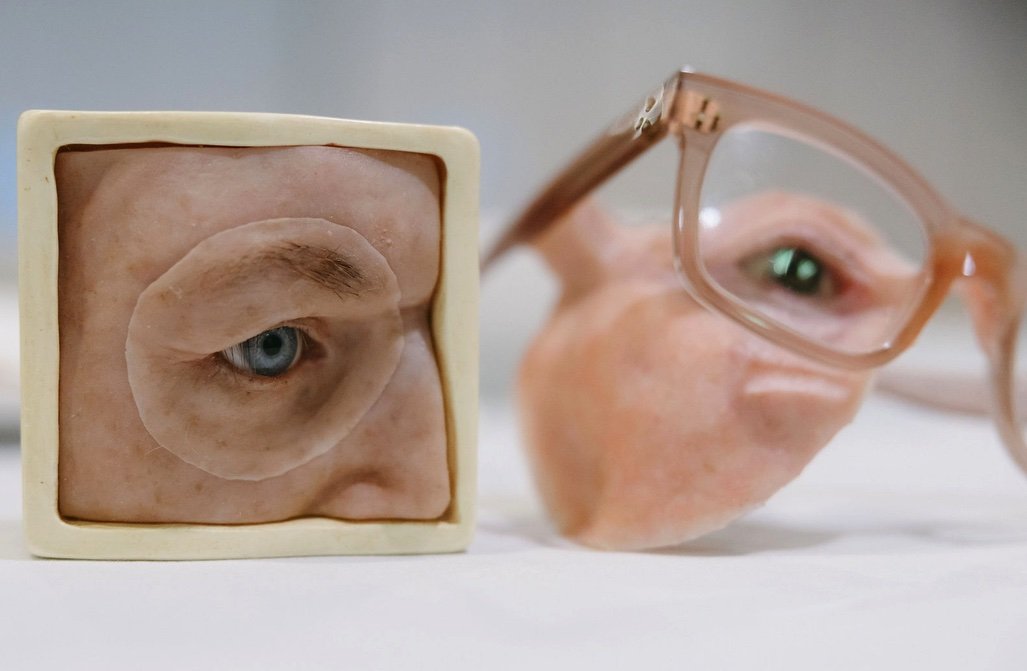
Cancer survivors and others told of the importance of improving access to prostheses for people who have often lost part of their faces as part of treatment.
Health policy analyst Charles Maskell-Knight attended the event, jointly hosted by Parliamentary Friends of Cancer Care and Cure, and Head and Neck Cancer Australia, and says the Federal Government should act urgently.
“It is unconscionable to fund cancer treatment, but then leave survivors to live with disfigurement unless they can find up to $12,000 for prostheses,” he writes below.
Charles Maskell-Knight writes:
In June I reported on the belated release by the Department of Health, Disability and Ageing of a report of an independent review of cancer prostheses equity in Australia carried out by KPMG.
The review was one of the recommendations of a Senate inquiry into equitable access to diagnosis and treatment for individuals with rare and less common cancers, which heard evidence that “cancer patients who require oral and maxillofacial rehabilitation, including prosthetics, following treatment for head and neck cancers, must fully pay for these procedures”.
The review found there is no national program or scheme currently in place for individuals requiring a facial prosthesis due to cancer or cancer treatment, although some publicly funded facial prostheses services are available in Victoria, Queensland, WA and the ACT.
This did not come as news to anyone interested in the issue, and particularly Head and Neck Cancer Australia (HANCA), which had been lobbying for a national scheme for some time.
In 2024 HANCA prepared a pre-election submission to the Government, proposing a Head and Neck Cancer External Facial Prosthetic Reimbursement Program to provide priority groups living with Head and Neck Cancer assistance to meet facial prosthetic costs.
This fell on deaf ears.
On 12 August, HANCA joined with the Parliamentary Friends of Cancer Care and Cure to hold an event at Parliament House to prosecute the case for Government action.
The event was titled “The missing piece of the puzzle”, with the tagline “the evidence is clear: the solution is ready”.
The event was compered by broadcaster Julie McCrossin AM, herself a head and neck cancer survivor.
Co-chairs of the Parliamentary group, Senator Deborah O’Neill and Dr Anne Webster MP, attended part of the meeting, as did Senator Helen Polley.
Shared experiences
The event heard from three cancer survivors, clinical anaplastologist Sophie Fleming, and head and neck surgeon and HANCA chair Dr Matthew Magarey.
Survivor Tracey David said: “We are not asking for something cosmetic. We are looking to live with dignity.”
Fellow survivor Ben Hale, who lost an eye due to cancer, was told prosthetic options existed, but there was no pathway, guidance or financial support.
Christoper Sequeira brought the house down when he said the case for change “was as plain as the nose on your face”.
Fleming said the lack of funding meant prostheses were retained and repaired and patched up long past the point at which they should have been replaced.
She also said there were fewer than 10 providers across the country, and no succession planning.
Magarey said: “We provide our patients with some of the most complex Head and Neck Cancer treatments covered by Medicare, yet there is no reliable or affordable pathway for people who need a facial prosthesis after cancer surgery.
“These people have often lost part of their face as a result of treatment. As a society, we have a responsibility to find a solution that restores not only their appearance, but also their confidence, dignity, and ability to fully participate in community life.”
He said HANCA was calling for:
Recognition that facial prostheses were an essential part of healthcare
Recognition that facial prostheses were an essential part of healthcare
A national program to fund facial prostheses
Equitable access for everybody, including rural and remote residents and First Nations peoples
Funding to build a sustainable workforce and establish education and accreditation programs.
Workforce matters
A critical element of the reform will be workforce development.
Fleming told Croakey that the absence of an education program was a major concern. She began her career creating prostheses in the film industry before beginning clinical work, and completed a Master’s degree in maxillofacial and craniofacial technology through Kings College London.
She is regularly contacted by would-be entrants to the sector, and has to tell them that there is no clear pathway into a career.
The only option at the moment is apprenticeship-style training with an established provider, which reduces the capacity of the current nine-person workforce while training is under way.
If any other element of the health workforce was in such a parlous state, the Government would be establishing scholarship schemes and introducing other incentives. This should be no different.
I’m not sure why the Government finds it so hard to act on this issue.
It is unconscionable to fund cancer treatment, but then leave survivors to live with disfigurement unless they can find up to $12,000 for prostheses.
The amount of money involved ($25 million over four years) is picayune compared with total Government spending on cancer treatment of $20 billion annually.
Annual spending would be less than five percent of the $116 million allocated to consultancy contracts let in 2025-26 by DHDA.
It would also be about the same amount as spending under the External Breast Prostheses Reimbursement Program.
The eligible population is tiny, and growing by 300 people a year.
In the scheme of things, this is a very minor reform, but with huge benefits for the small number of people who have survived intensive and disfiguring treatment for cancer.
The Government needs to realise it wasn’t elected to put boots on caterpillars, and get on with implementing a scheme to address the issue.
Readers interested in learning more about the issue can find the brochure distributed at the Parliament House event here.
Questions for the Minister
Croakey has asked Minister Mark Butler for comment, noting that it is now over two years since the Senate report, and just under a year since the KPMG report was handed to the Government. Responses to these questions will be added:
Is the Government going to address this horrendous gap in the health system and introduce a national scheme, and if so, when?
And if not, why not?

Author details
Charles Maskell-Knight PSM was a senior public servant in the Commonwealth Department of Health for over 25 years before retiring in 2021. He worked as a senior adviser to the Aged Care Royal Commission in 2019-20. He is a member of Croakey Health Media, and author of the weekly column, The Zap. Follow on X/Twitter at @CharlesAndrewMK, and on Bluesky at: @charlesmk.bsky.social.